
There is no single right mortgage — there is the one that fits your situation. This page walks through every program we offer, what each one is built to solve, and what it takes to qualify, so you can start the conversation already knowing which questions matter.
Mortgages divide into two jobs: buying a home, or reworking the one you already own. Start with the job you are trying to do — each program below links to a full page on how it works.

For veterans, active-duty service members, and eligible surviving spouses. No down payment required and no monthly mortgage insurance — two costs that shape the payment more than most buyers expect. Requires a Certificate of Eligibility.

Insured by the Federal Housing Administration and built for buyers whose credit or savings are still catching up to their income. The trade-off is mortgage insurance that generally stays for the life of the loan when you put down less than 10%.
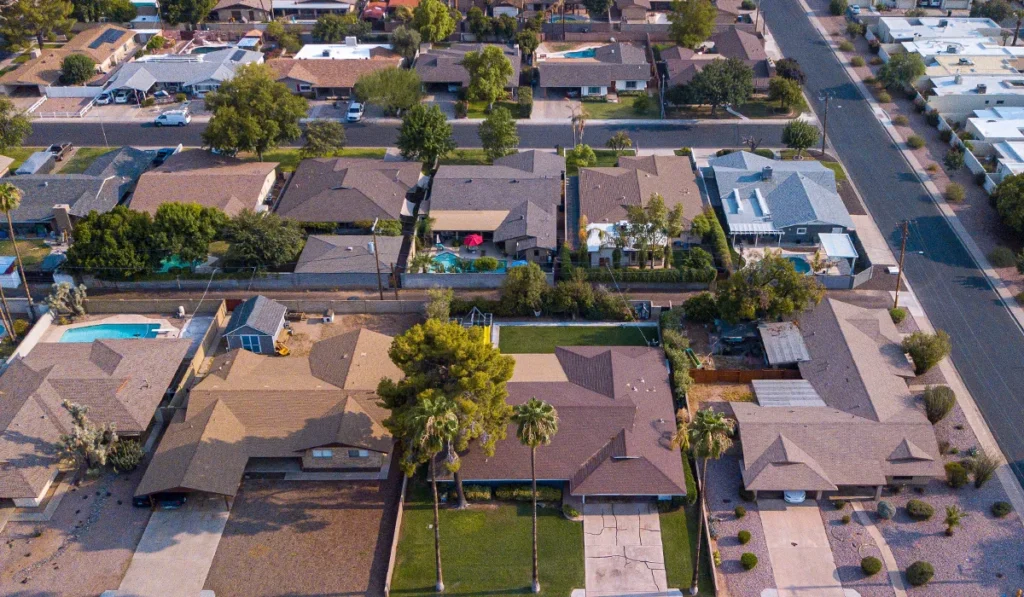
The most common path for buyers with established credit. Not government-insured, so the guidelines come from Fannie Mae and Freddie Mac — which means more flexibility on property type and a clear route to dropping mortgage insurance later.
Three questions, no contact information, no credit pull. This points you at the programs worth reading about first — a loan officer confirms what you actually qualify for.
Answer what you know. Skip what you don't.
1 · What are you trying to do?
2 · Have you or your spouse served in the military?
3 · How much do you have set aside for a down payment?
3 · Do you already have a VA loan on the home?
This is an educational starting point, not a pre-qualification or an offer of credit. Eligibility depends on credit, income, debts, and the property itself.
The same four questions asked of every program. Use it to spot which ones deserve a closer look before you talk to our team.
| Program | Best For | Minimum Down | Mortgage Insurance | Worth Knowing |
|---|---|---|---|---|
| Conventional | Established credit, flexible property types | 3% | Until 20% equity | The only common program where mortgage insurance eventually goes away on its own |
| FHA | Lower credit scores, thinner savings | 3.5% | Upfront + annual | Insurance usually lasts the life of the loan under 10% down; refinancing is the exit |
| VA Purchase | Veterans, active duty, eligible spouses | None | None | A one-time funding fee applies, waived for many with a service-connected disability |
| Rate-and-Term Refinance | Lowering a payment or shortening a term | N/A — equity based | Depends on equity | Closing costs mean there is a break-even point; run it before you commit |
| Cash-Out Refinance | Turning equity into usable cash | N/A — equity based | Depends on equity | Typically capped near 80% of value, so about 20% equity stays in the home |
| VA IRRRL | Homeowners already holding a VA loan | N/A | None | Often no new appraisal or income documentation |
| VA Cash-Out | Veterans tapping equity or leaving FHA | N/A — equity based | None | Also the route out of FHA mortgage insurance for eligible veterans |
The same four questions asked of every program. Use it to spot which ones deserve a closer look before you talk to our team.
Down payment is where most programs separate. Move the slider to a price you are considering and watch the minimums move with it.
Program minimums only. Closing costs are separate, and qualifying still depends on credit, income, and debts. A larger down payment lowers the loan amount and can remove mortgage insurance — it is not automatically the better move if it drains your reserves.
Five stars, more than 1,500 times. Read what people say about buying and refinancing with MVP.

 Eligio Marcoviche
Trustindex verifies that the original source of the review is Google.
Michael Guevara, professional, details on information giving me, every may of the closed out. Michael Guevara es un profesional en el work que hace., muy detallista durante el cierre de contrato. My recommendation to do business with him. Airborne all the way Michael ThibaultJosh did a good job helping me refinance would recommend to friends and family
 Wesley MJosh was great looking forward to doing this with him again in the future
 Mike GreenI want to thank Joe Soto for leading me through the refinance process! He made the process go fast and effortlessly, efficiently and most of all personally. That personal touch made all the difference in making this a great experience!
 Mario VelazquezNickolas Jamgochian was great helping me navigating the process of getting a difficult process of exiting my previous mortgage management services, and I am very thankful for the help. Nick is highly recommended
 Regina BanksGreat lower interest rate and excellent customer service! 💯💯💯
 Lawrence RaithGot everything taken care of quickly and hassle free
 Scott SeemanNick was great, hoping to use him again in six months!
We would rather you understand the loan than sign one quickly. Our team treats your goals as its own.

Ready to see which program fits? Fill out our short application and one of our mortgage professionals will reach out to walk you through your options.
DISCLAIMER:
This is not a commitment to lend or extend credit. All loans are subject to credit approval. Information is subject to change without notice. Other restrictions may apply. VA loan benefits are subject to eligibility requirements determined by the U.S. Department of Veterans Affairs. Loan limits and program guidelines shown are current as of 2026 and change annually.
Straight answers on choosing between programs.
There is no single answer, and any lender who gives you one without asking questions is guessing. If you have served in the military, a VA loan is usually the strongest starting point because it requires no down payment and carries no monthly mortgage insurance. Otherwise it typically comes down to conventional at 3% down versus FHA at 3.5% — conventional tends to win when your credit is solid because the mortgage insurance eventually falls off, while FHA is more forgiving of a lower score.
Yes, through a refinance. This is common for FHA borrowers: you buy with FHA because the credit requirements are reachable, then refinance into a conventional loan once you have built equity and strengthened your credit, which ends the mortgage insurance. Eligible veterans can refinance an FHA or conventional loan into a VA loan for the same reason. Refinancing has closing costs, so the math has to work — that is the break-even calculation.
More than the down payment alone. Budget for closing costs, which commonly run 2% to 5% of the loan amount and cover appraisal, title, origination, and prepaid items like taxes and insurance. Lenders also like to see reserves left over after closing. A buyer putting 3.5% down on a $400,000 home is realistically planning for the $14,000 down payment plus roughly $8,000 to $19,000 in closing costs, some of which a seller may agree to cover.
Usually, for two reasons: you are borrowing more, and you are more likely to be paying mortgage insurance. That does not automatically make a bigger down payment the right call. Draining your savings to reach 20% can leave you without a cushion for repairs or an income gap. Many buyers are better served putting less down, keeping reserves, and removing mortgage insurance later as the balance falls.
No. Conventional loans generally start around a 620 score, FHA can go to 580 with 3.5% down and lower with a larger down payment, and VA loans have no VA-set minimum, though individual lenders set their own. Credit is only one input — income stability, debt-to-income ratio, and the property all factor in. If your score is the thing holding you back, we will tell you what specifically to work on rather than just declining you.